Kaiping Diaolou: Which Village to See First, and What the Tickets Actually Cost
✅ Status check (verified 2026-10-21): open, ticketed per cluster. Prices below are the 2026 posted list — confirm at the gate, because published price lists disagree with each other.
On this page
- What a diaolou actually is
- The four clusters, and which one to see first
- Tickets: what you actually pay
- Chikan: is the ¥150 town worth it?
- Getting there from Guangzhou or Hong Kong
- When to go
- Practical notes
- FAQ
- How long do I need for Kaiping?
- Can I climb inside a diaolou?
- Is the ¥180 combined pass worth it?
- Is Chikan part of the World Heritage site?
- Do I need a guide?
- Check dates and availability
Kaiping is a county-level city in Guangdong, about an hour west of Guangzhou by high-speed train. It is not on most first-time China itineraries, and the thing that put it on the UNESCO list in 2007 has no real equivalent anywhere else in the country: the diaolou — multi-storey fortified village houses, built between the late 19th century and the 1930s with money sent home by Kaiping emigrants working in North America, Australasia and Southeast Asia.
They are strange buildings, and that is the point: a Greek colonnade, an Art Deco parapet, imported cement and a Chinese tiled roof, stacked five or six storeys over a rice field.
The timing is good: on 19 October 2026 the provincial tourism authorities opened an inbound-tourism event at Chikan with 200 travel buyers and creators from 55 countries, and announced a "Discover Guangdong" AI service card. Whether that card reaches independent travellers yet is unclear, but the region is now being marketed to exactly this audience.
What follows is the order a first-timer actually decides in: what you are looking at, which cluster to visit first, what it costs, and whether the rebuilt town next door is worth its ticket.
What a diaolou actually is
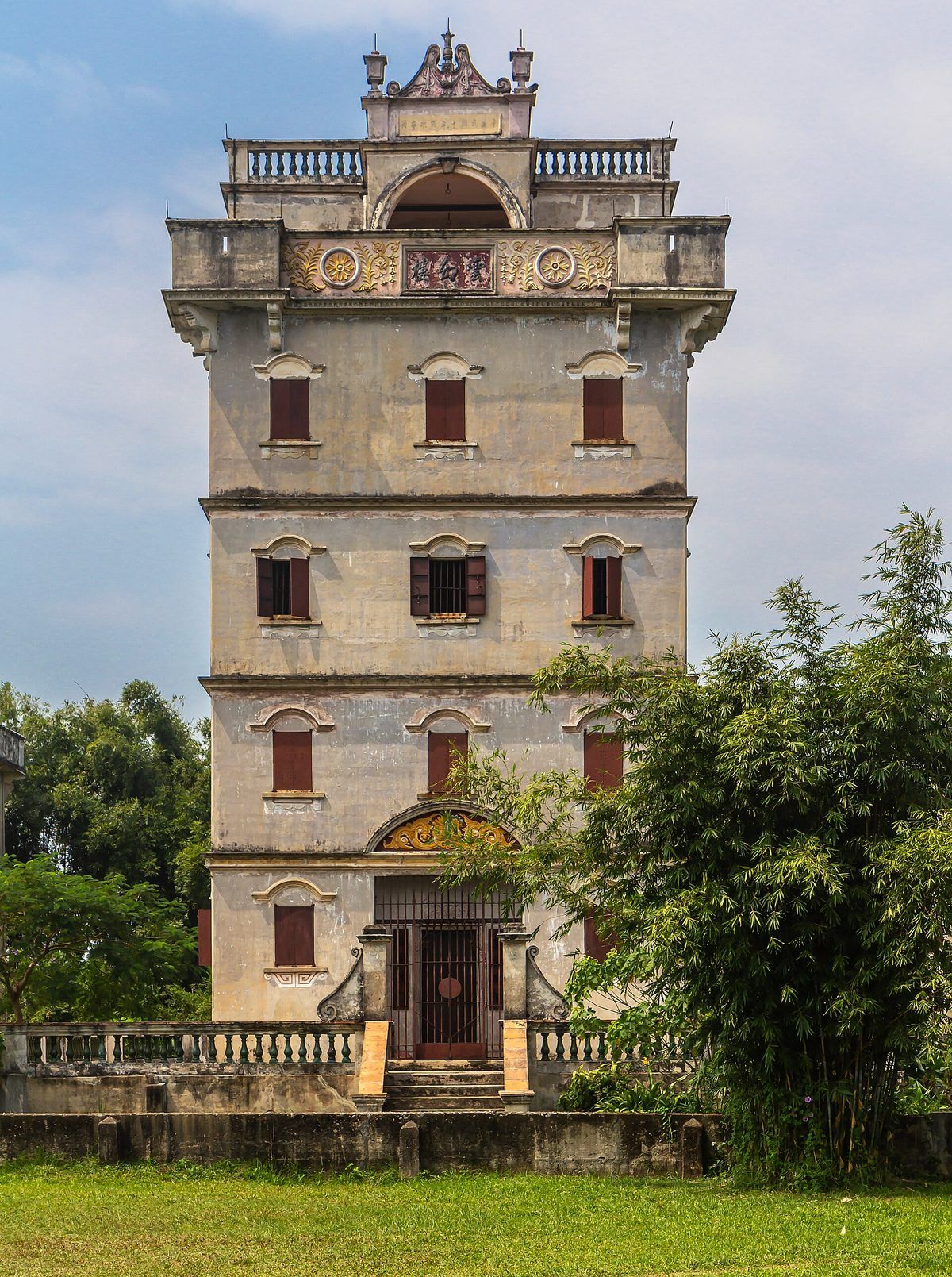
The UNESCO listing counts four groups of towers, twenty buildings inscribed, chosen to represent roughly 1,800 diaolou across the Kaiping countryside. Three types are recognised:
- Communal towers (473 survive): built by several families together, used as temporary refuge when bandits or floods came.
- Residential towers (1,149 survive): a single wealthy family's fortified house, usually the most decorative.
- Watchtowers (221 survive): the latest type, built for early warning across a village cluster.
Materials varied with budget — stone, rammed earth, grey brick, and by the 1920s reinforced concrete poured with imported cement. The decoration is where the emigration shows: Baroque pediments, Corinthian columns, Islamic domes, machine-cut balustrades, all sitting on a Cantonese village plan.
Two things matter before you arrive. These are not museums in the usual sense — several are still owned by the descendants of the families who built them, which is why some interiors are open and others are not. And they were built for defence: steep stairs, narrow corridors, small windows. That is the architecture, not a maintenance problem.
The four clusters, and which one to see first
The inscribed clusters are Zili, Majianglong, Jinjiangli and Sanmenli. They are not next to each other — expect 20 to 40 minutes of driving between them.
| Cluster | What it is | Why go |
|---|---|---|
| Zili (Tangkou) | The flagship group: around 15 towers standing in open rice fields | Best first stop; one tower is normally open to climb, and the fields give the classic view |
| Majianglong | A smaller group inside a bamboo grove | Quieter, greener, better in harsh midday light |
| Jinjiangli | Home to the tallest tower in the property, nine storeys | Seen mostly from outside — the height is the point |
| Sanmenli | The oldest inscribed tower, a Ming-era brick structure | Short stop, usually combined with Zili |
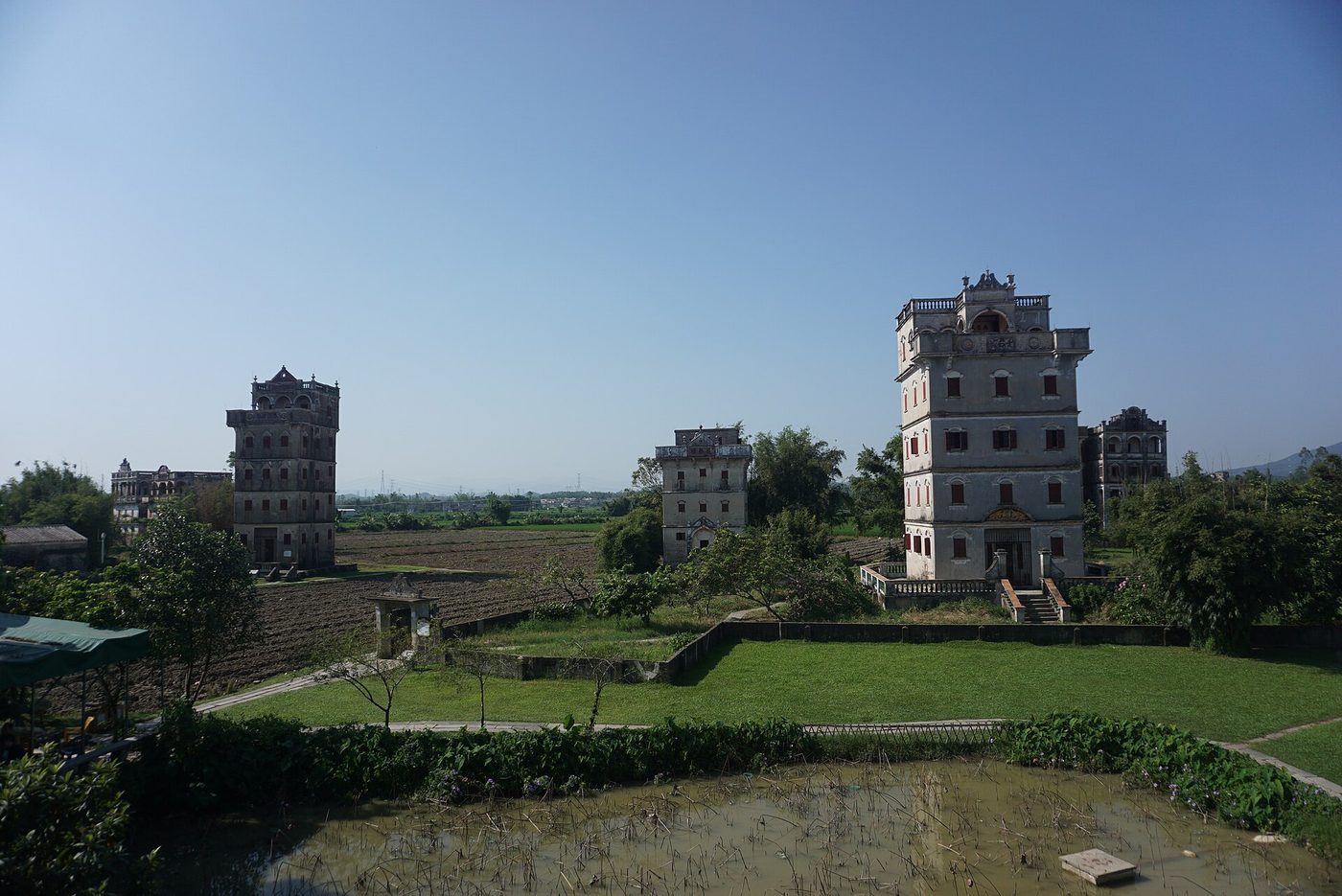
Start at Zili. It is the group that explains the others: towers in a working landscape rather than behind a fence, and the one place where climbing a tower is part of a normal visit. If you only have half a day, Zili alone is a better use of it than rushing three clusters.
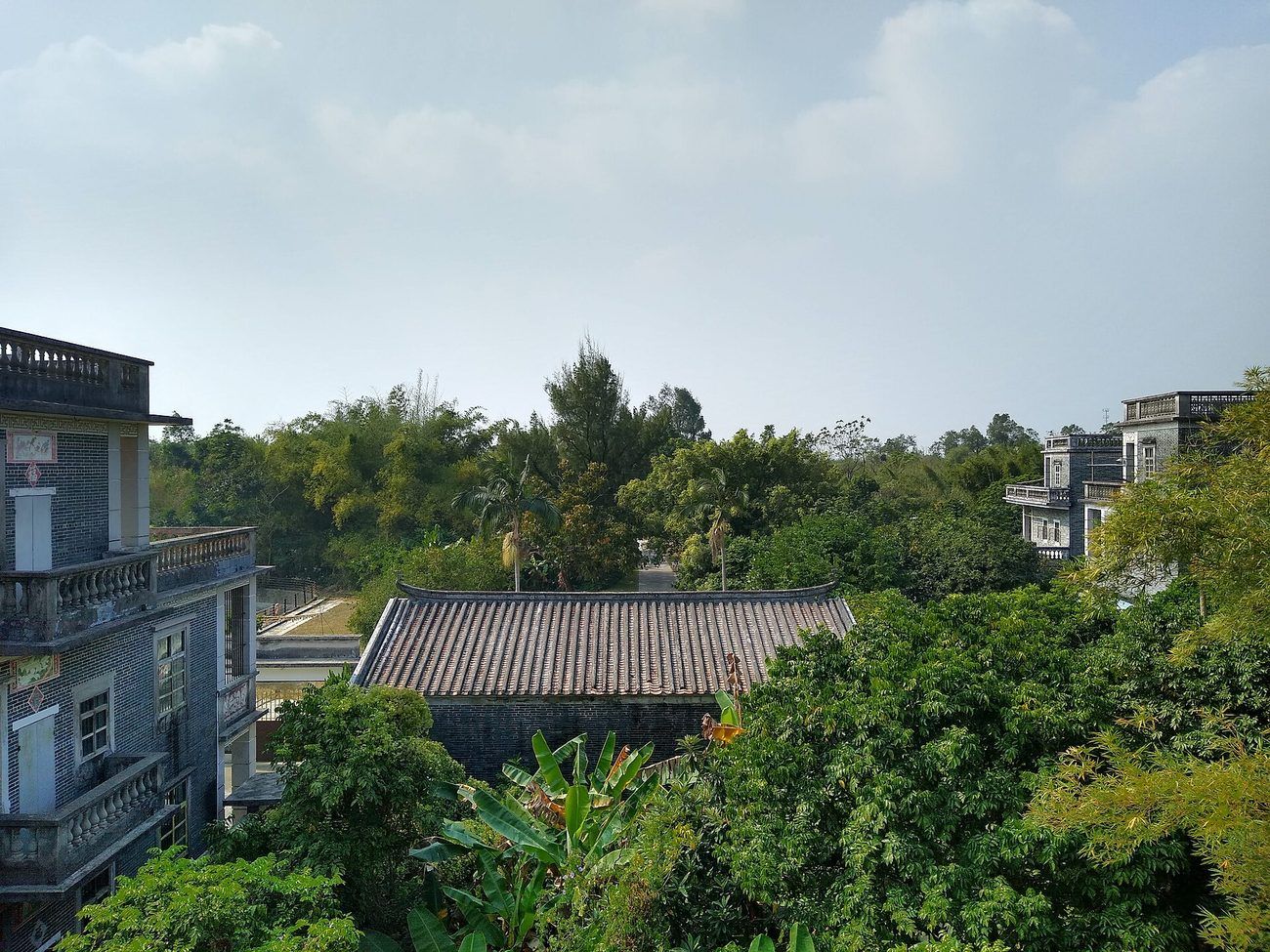
Majianglong is the alternative, not the addition. If you are visiting in summer, the bamboo gives shade the open fields do not.
Jinjiangli is a photo stop. The nine-storey tower is impressive from the ground and generally not open inside, so do not build a morning around it.
Tickets: what you actually pay
There is no single gate. Each cluster is ticketed separately, and the neighbouring attractions are separate again.
| What you pay for | 2026 posted price | Notes |
|---|---|---|
| Zili village | ¥78 | The main cluster; allow 90 minutes |
| Other clusters (Majianglong, Jinjiangli, Sanmenli) | ¥50–60 each | Priced individually |
| Li Garden | ¥100 | A 1930s garden estate, not one of the UNESCO clusters |
| Combined pass, five sights | ¥180 | Valid two days |
| Chikan (the rebuilt town) | ¥150 | Separate ticket, separate place |
Two things to hold onto. The combined pass is the only reason to see more than two clusters in one trip — at ¥180 for two days it undercuts buying three singles. And published prices disagree. The Zili ticket is quoted as ¥78 in current listings and as ¥75 or even ¥50 in older ones; the difference is year and sales channel. Treat the table as a planning figure and the gate as the authority.
Concessions for children, students and seniors are checked against documents at the gate. Nothing is sold as a timed entry, so the risk is queueing, not selling out.
Chikan: is the ¥150 town worth it?
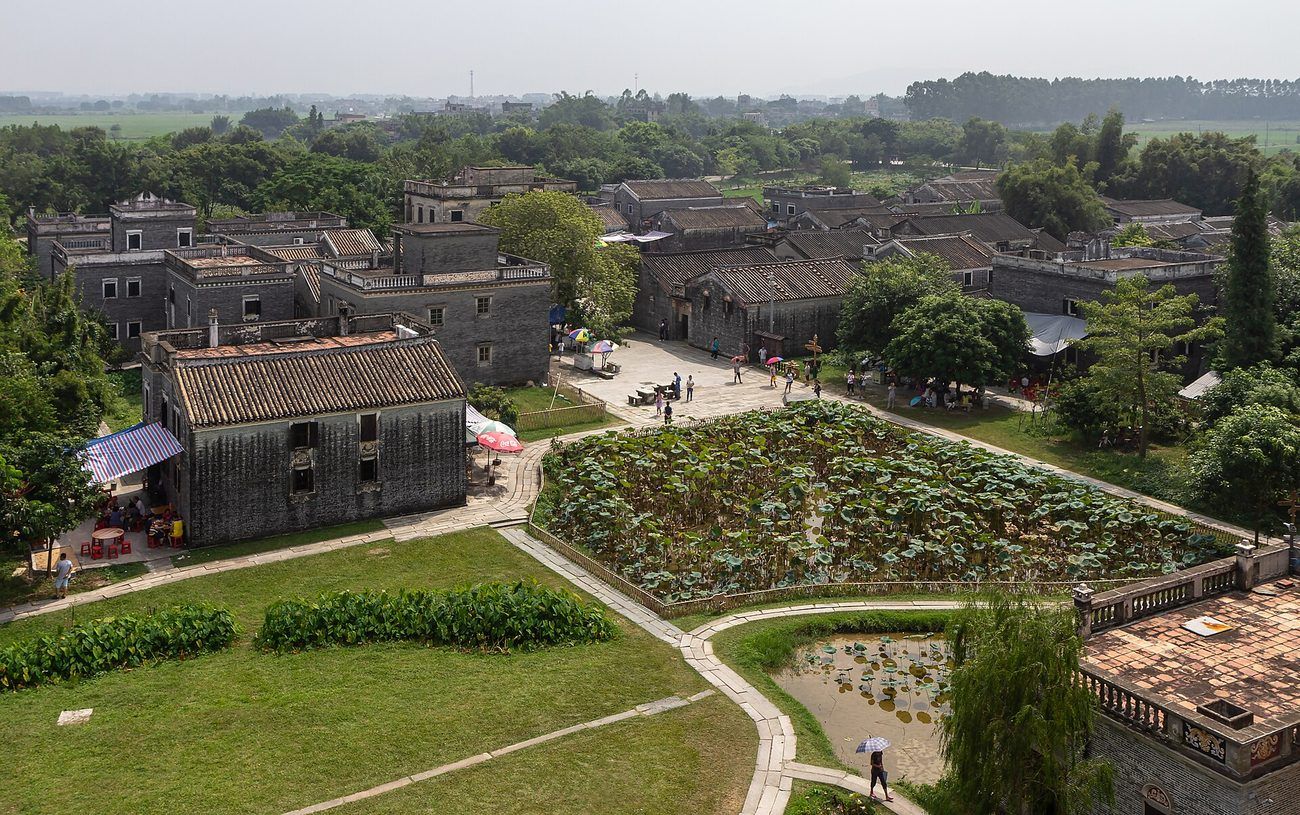
Chikan is the reason this region now appears in tour programmes, and it needs an honest description: it is a restored and partly rebuilt resort area, not a living heritage village. More than 600 qilou arcade buildings line two rivers, there is a tram, and the whole thing is lit at night.
That is either what you want or what you are avoiding. As a place to sleep, eat and walk after dark it works: continuous arcades, a flat riverside, and evening lighting as the main event. As heritage, the UNESCO villages are the real thing and Chikan is the stage set.
If you have one day, spend it at Zili and skip Chikan. If you have two, sleep in Chikan, see Zili in the morning light and Majianglong in the afternoon.
Getting there from Guangzhou or Hong Kong
By train. High-speed services run from Guangzhou South to Kaiping South in about an hour, frequently through the day. From Hong Kong West Kowloon, take a service to Guangzhou South and change — some departures run through to Kaiping South directly, so check the specific train rather than assuming a change.
From the station. Kaiping South is roughly 20 to 30 minutes by taxi from Tangkou, the village cluster area. There is no metro, and local buses are not built around visitors: a taxi or a car with driver for the day is the practical answer for more than one cluster.
Booking with a foreign passport. Chinese rail tickets are sold through 12306, which accepts passport registration, and gates read the passport itself. Foreign passports usually mean the staffed counter rather than the machine, so leave time on the first leg.
When to go
Late October to late November is the window. The rice in front of Zili turns gold before harvest, which is the view every photograph of the property is built on. The same fields are flooded or bare at other times of year.
Summer is the season to avoid if you can. July and August are hot, humid and inside the typhoon season, with almost no shade between the towers.
Avoid public holidays. National Day week in early October and Lunar New Year are when domestic group traffic peaks at the sites you came to see quietly.
Weekday mornings. Several towers face east over the fields, and the light is better before eleven.
Practical notes
- Stairs are the constraint. Climbing a tower means steep, narrow, low-ceilinged stairs, sometimes in single file. Anyone with mobility limits, young children or a fear of enclosed spaces should treat the ground-level view as the visit.
- Not every tower is open. Interiors owned by descendants may be closed; the exterior and the village lanes are the constant.
- Published hours cluster around 08:30–17:30, with last entry earlier. Check on the day.
- Take water and mosquito repellent. This is farmland: little shade, few shops, standing water nearby.
- Payments are mobile-first. Alipay and WeChat Pay cover the ticket desks and most stalls; foreign cards work at larger businesses, not at village level.
FAQ
How long do I need for Kaiping?
Half a day for Zili alone, a full day for Zili plus one more cluster, and two days if you want the pass, the bamboo grove and an evening in Chikan.
Can I climb inside a diaolou?
Usually at Zili, where one tower is normally open and the stairs lead to the top-floor lookout. Elsewhere interior access varies by building and season.
Is the ¥180 combined pass worth it?
Only if you will see three or more sights within two days. For a single cluster, buy the single ticket.
Is Chikan part of the World Heritage site?
No. The UNESCO property is the four village clusters with their inscribed towers. Chikan is a separately ticketed restored town nearby, and it is worth being clear about that difference before you pay ¥150.
Do I need a guide?
Not for the towers. Transport between clusters is the real constraint, so a driver for the day solves more than a guide does; a guide helps most with the family histories inside the residential towers.
Some links in this section are affiliate links — we may earn a commission if you book through them, at no extra cost to you. Affiliate disclosure.
Check dates and availability
The clusters are ticketed per site, not by timed slot, so what is worth arranging before you go is transport — the towers are spread across farmland with no public transport between them:
👉 Check Kaiping day-trip options
Disclosure: This article includes an affiliate link. I may earn a commission if you book through it, at no extra cost to you. This guide describes publicly listed information only — I have not personally taken these tours.
Image sources: Wikimedia Commons and stock library photos, credited in each caption where required.